
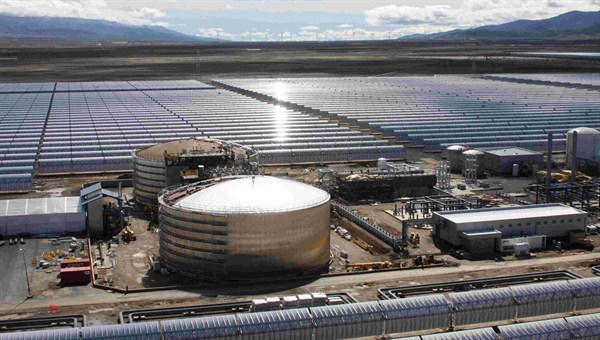
In the quest for a sustainable and environmentally friendly energy future, renewable energy sources like solar and wind have taken center stage. However, these sources are inherently intermittent, producing electricity only when the sun shines or the wind blows. To bridge the gap between intermittent energy generation and constant power supply, innovative energy storage solutions have emerged, and one of the most promising technologies is Molten Salt Long Duration Energy Storage (LDES).
A New Horizon for Energy Storage
Molten Salt Energy Storage is poised to revolutionize the way we store and utilize renewable energy. It offers a versatile, efficient, and sustainable means of storing excess energy and ensuring a continuous power supply, even when primary energy sources are not available.
How Molten Salt Energy Storage Works
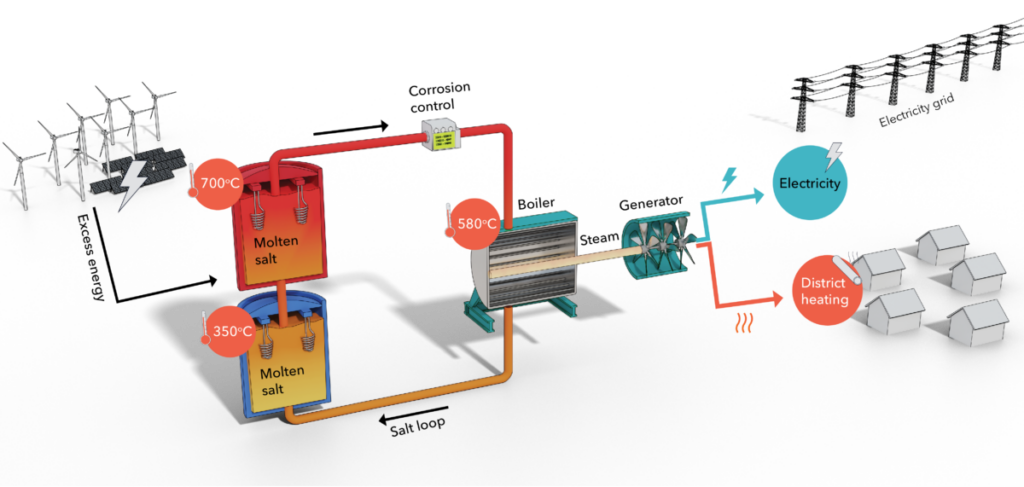
Molten Salt Energy Storage involves heating and storing a mixture of molten salts, typically sodium nitrate and potassium nitrate. During times of excess energy generation, such as when the sun is shining brightly or the wind is blowing strongly, surplus electricity is used to heat and melt the salts. The molten salts are stored in insulated tanks, preserving the heat energy for future use.
When electricity is required, the hot molten salt is pumped through a heat exchanger, transferring its thermal energy to a working fluid, often a synthetic oil or a mixture of gases. This working fluid, now heated by the molten salt, is used to drive a turbine, which generates electricity. The process is highly efficient and can store energy for extended periods, making it an ideal solution for Long Duration Energy Storage.
Key Benefits of Molten Salt Energy Storage
- 1. Long Duration Energy Storage: Molten salt systems are capable of storing energy for extended periods, from several hours to several days. This ensures a consistent power supply, even during periods of low renewable energy production.
- 2. High Efficiency: Molten salt energy storage is known for its high efficiency and minimal energy loss during the storage and retrieval processes. This means that a significant portion of the stored energy can be effectively converted back into electricity.
- 3. Cost-Effective: The materials used in molten salt energy storage systems are abundant and affordable, making the technology cost-effective. Additionally, the long cycle life of the system contributes to its economic viability.
- 4. Environmentally Friendly: Molten salt energy storage is environmentally friendly, as it doesn’t rely on fossil fuels and doesn’t produce greenhouse gas emissions during energy storage or retrieval. It aligns with the goals of reducing carbon footprints and combating climate change.
Benefits of Using Seawater as a Source of Salt
One of the significant advantages of molten salt energy storage is the ability to use seawater as the source of salt. This approach brings several key benefits:
- 1. Sustainability: Seawater is an abundant and renewable resource. By using it as a source of salt, we reduce the need for mining and processing natural minerals, which can be environmentally damaging.
- 2. Cost-Effectiveness: Seawater is cost-effective and widely available, making the overall system more economically viable.
- 3. Environmental Impact: Traditional salt mining and processing can have negative environmental consequences. By using seawater, we mitigate the environmental footprint of the molten salt energy storage process.
- 4. Desalination: As a remarkable by-product of the molten salt energy storage process, desalination occurs. As seawater is heated to produce molten salt, it undergoes a desalination process, producing pure, potable water. This clean water can be stored or distributed, addressing water scarcity issues in regions where desalination is a necessity.
Applications of Molten Salt Energy Storage
Molten salt energy storage has a wide range of applications, with the potential to transform various sectors:
- 1. Grid Stabilization: It can enhance the stability and reliability of electrical grids, ensuring a continuous power supply even when renewable sources are not producing energy.
- 2. Integration of Renewable Energy: Molten salt energy storage enables the efficient integration of intermittent renewable energy sources, such as solar and wind, into the electrical grid.
- 3. Industrial Processes: Industries with fluctuating energy demands, such as steel manufacturing and chemical processing, can benefit from molten salt energy storage to optimize their energy use.
- 4. Remote Areas and Microgrids: It’s an excellent solution for remote areas and microgrids, providing reliable power in locations where access to the grid is limited.
The Path to a Sustainable Energy Future
Molten Salt Long Duration Energy Storage is a game-changer in the renewable energy landscape. As the world continues its transition toward clean and sustainable energy sources, the demand for reliable and efficient energy storage solutions grows. Molten salt energy storage is well-positioned to meet this demand, playing a pivotal role in shaping a sustainable and green energy future.
With ongoing research and development, we can expect molten salt energy storage to become more accessible and cost-effective, making it an integral part of our efforts to reduce carbon emissions, combat climate change, and create a world powered by clean, reliable, and sustainable energy.
In conclusion, molten salt energy storage represents a significant leap forward in our journey toward a more sustainable and environmentally conscious energy landscape. It’s a powerful tool that brings us closer to a future where clean energy is not only abundant but also available whenever we need it, while also addressing water scarcity issues through desalination.